
8200 Series Lockbody
Part of Lock Parts › Sargent › 8200 Series › Lock Bodies
More Sargent lock parts: 7800 Series Lock Bodies · 8200 Series Parts · 10X Line Parts · 10 Line Parts · 7 Line Parts · 6500 Series Parts · 6 Line Parts
Other manufacturers and series: all lock parts by manufacturer
Grade 1 mortise lock bodies
Sargent 8200 Series Lock Bodies
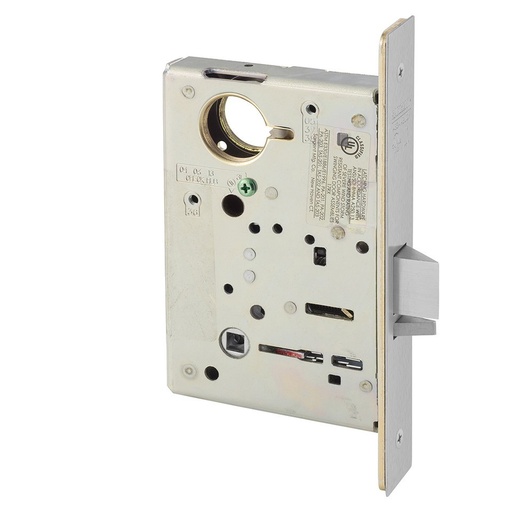
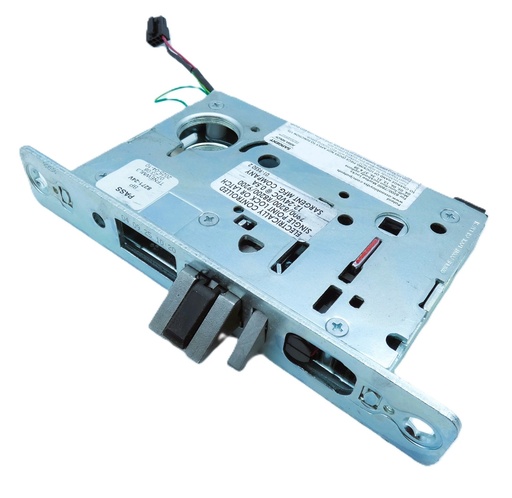
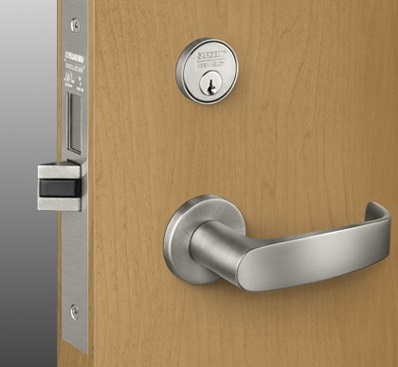
Replacement 8200 lock bodies in 51 functions, including electrified fail safe and fail secure. Trim and cylinders are sold separately.

About this collection
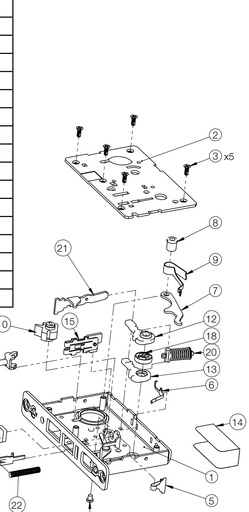
Every 8200 Series lock body we list is on this page, one listing per function. Sargent's catalog says 8200 lock bodies are dimensionally the same except for the through-bolt locations. Use the functions table below to match the door use, then open that body's listing.
SARGENT and the SARGENT logo are trademarks of their respective owner.
8200 lock functions
Match the door use, then pick the function. Each row is a plain-English reading of Sargent's catalog description, with badges for the outside lever, how it locks, and whether the inside is always free. Tap a function to open that lock body in the products below.
How to read a row
Outside locked means the outside lever cannot be used until something unlocks it. Outside locks means the outside lever can be locked or unlocked. Inside always free means the inside lever lets you out. Inside not always free means the inside lever may not retract a thrown deadbolt, or there is no inside trim — Sargent does not recommend those functions for a door people must use to get out. ANSI numbers are as Sargent lists them; a dash means Sargent lists no ANSI number.
Classroom
· 5 functions
A key locks or unlocks the outside lever; inside always lets you out.
A key from either side locks or unlocks the outside lever; inside always lets you out.
Throwing the deadbolt with a key from either side locks the outside lever; retracting it unlocks the outside. Inside retracts the latch and deadbolt and unlocks the outside.
Throwing the deadbolt with a key from either side locks the outside lever; retracting it unlocks the outside. Inside retracts the latch and deadbolt and unlocks the outside.
Throwing the deadbolt locks the outside lever. A key retracts the deadbolt, then a second turn unlocks the outside; inside retracts the latch and deadbolt but leaves the outside locked.
Storeroom
· 8 functions
The outside lever is always locked. A key retracts the latch; inside always lets you out.
Both levers retract the latch at all times. A key from either side works the deadbolt separately, so a lever will not retract a thrown deadbolt. Not for a door that people must use to get out.
Both levers retract the latch at all times. A key works the deadbolt separately, so the inside lever will not retract a thrown deadbolt. Not for a door that people must use to get out.
The outside lever is always locked; a key retracts the latch. There is no inside trim. Not for a door that people must use to get out.
A key works the deadbolt, which also locks the outside lever. There is no inside trim. Not for a door that people must use to get out.
A key locks or unlocks the outside lever. There is no inside trim. Not for a door that people must use to get out.
A toggle or throwing the deadbolt locks the outside lever; only the toggle unlocks it. The inside lever retracts the latch only — the deadbolt must be retracted with a key. Not for a door that people must use to get out.
The outside lever is always locked. A key or the thumbturn works the deadbolt; a key also retracts the latch. Inside retracts the latch and deadbolt so you can get out.
Office / entry
· 4 functions
A key or the inside thumbturn locks or unlocks the outside lever; inside always lets you out.
Both levers retract the latch at all times. A key or the inside thumbturn works the deadbolt separately, so the inside lever will not retract a thrown deadbolt. Not for a door that people must use to get out.
A toggle on the lock locks or unlocks the outside lever; a key retracts the latch but does not unlock it. Inside always lets you out.
A key or the inside thumbturn locks the outside lever; using the inside lever unlocks it. Inside always lets you out.
Privacy
· 6 functions
The inside thumbturn locks the outside lever; it unlocks when the door closes or when you use the inside lever. An emergency release on the outside can also unlock it.
The inside thumbturn throws the deadbolt and locks the outside lever. Inside retracts the latch and deadbolt and unlocks the outside. An emergency release on the outside can also work the deadbolt.
Both levers retract the latch at all times. The inside thumbturn works the deadbolt separately, so the inside lever will not retract a thrown deadbolt. Not for a door that people must use to get out.
The inside thumbturn locks the outside lever; it unlocks when the door closes, when you use the inside lever, or with a key (the key only unlocks, it does not lock). Inside always lets you out.
The inside thumbturn locks the outside lever; it unlocks when the door closes or when you use the inside lever. A key can also lock or unlock it. Inside always lets you out.
The inside thumbturn locks the outside lever; it stays locked when the door closes and unlocks when you use the inside lever. A key can also lock or unlock it. Inside always lets you out.
Apartment, dormitory and hotel
· 7 functions
A key on the inside locks or unlocks the outside lever; a key outside retracts the latch. Inside always lets you out.
Throwing the deadbolt with a key or the thumbturn locks the outside lever. Inside retracts the latch and deadbolt together and unlocks the outside.
A toggle or throwing the deadbolt locks the outside lever; only the toggle unlocks it. Inside always retracts the latch and deadbolt, but that does not unlock the outside.
A toggle or throwing the deadbolt locks the outside lever; only the toggle unlocks it. Inside always retracts the latch and deadbolt, but that does not unlock the outside.
A toggle or throwing the deadbolt locks the outside lever; only the toggle unlocks it. A key from either side works the latch and deadbolt, but does not unlock the outside. Inside retracts both, and the outside stays locked.
A toggle or throwing the deadbolt locks the outside lever; only the toggle unlocks it. The inside lever retracts the latch only — the deadbolt must be retracted by the thumbturn or a key. Not for a door that people must use to get out.
The outside lever is always locked. The inside thumbturn works the deadbolt; inside also retracts the latch and deadbolt so you can get out.
Passage
· 3 functions
Both levers are always free; this lock does not lock.
No outside lever or cylinder. The inside lever retracts the latch so you can get out.
Both levers are always free; this lock does not lock. The inside thumbturn only changes the occupied/vacant indicator. Sargent lists this function only with V-series indicators.
Double cylinder
· 4 functions
Both levers are always locked. A key from either side retracts the latch. Not for a door that people must use to get out.
A key from either side locks or unlocks both levers, or retracts the latch without unlocking them. Not for a door that people must use to get out.
Throwing the deadbolt with a key from either side locks both levers. A key also retracts the latch. Not for a door that people must use to get out.
Both levers are always locked. A key from either side retracts the latch and works the deadbolt. Not for a door that people must use to get out.
Holdback
· 4 functions
A key locks or unlocks the outside lever; inside always lets you out. The latch can be held back so the door stays unlatched.
A key from either side locks or unlocks the outside lever and can hold the latch back so the door stays unlatched. Inside always lets you out.
No outside lever — a key retracts the latch and can hold it back so the door stays unlatched. Inside always lets you out.
No outside lever — a key outside retracts the latch, and a key inside can hold it back so the door stays unlatched. Inside always lets you out.
Electrified
· 4 functions
Power on locks the outside lever; if power is lost, the outside unlocks. A key retracts the latch; inside always lets you out.
Power on unlocks the outside lever; if power is lost, the outside stays locked. A key retracts the latch; inside always lets you out.
Power on locks both levers together; if power is lost, both unlock. A key from either side retracts the latch. Not for a door that people must use to get out.
Power on unlocks both levers together; if power is lost, both stay locked. A key from either side retracts the latch. Not for a door that people must use to get out.
Dummy trim
· 6 functions
Deadbolt only. The outside lever is always locked; a key or the inside thumbturn works the deadbolt, and the inside lever also retracts it.
Deadbolt only. The outside lever is always locked; a key from either side works the deadbolt, and the inside lever also retracts it.
Deadbolt only. The outside lever is always locked; a key works the deadbolt, and the inside lever retracts it.
A pull only: inside trim is always rigid. Comes as a lock case and front. Not for the inactive leaf of a pair.
A pull only: trim on both sides is always rigid. Comes as a lock case and front. Not for the inactive leaf of a pair.
Trim on both sides is active (not rigid). Comes as a lock case and front. Not for the inactive leaf of a pair.
Function names, ANSI numbers and behavior are from the Sargent 8200/7800 catalog 90115 (11/26), pp. 18–26 and 28. A dash means Sargent lists no ANSI number for that function. Electrified 8270–8273 are specified 12 VDC or 24 VDC (p. 28).
The product grid is directly below. Jump to products.