
Commercial door hardware / Exit devices
Commercial Exit Devices & Panic Hardware
Choose rim, mortise, surface vertical rod or concealed vertical rod exit devices for commercial openings. Compare the door preparation, fire-door listing, outside trim and access-control requirements before selecting a series.
Browse devices from Sargent, Accentra, PDQ, Hager and Dorma. Product availability and options vary by series; use the matching manufacturer documents to confirm compatibility.
Commercial Exit Devices & Panic Bars
Ensure the safety and security of high-occupancy buildings with commercial exit devices designed for rapid, fail-safe egress. Often referred to as panic bars or push bars , these devices solve the vital challenge of allowing immediate exit during emergencies while maintaining a secure, locked exterior. For openings subject to NFPA 101 and ADA requirements, compliance depends on the selected device, complete door assembly, installation and applicable code requirements; a product category does not establish universal compliance. Whether you are managing fire-rated openings or high-traffic storefronts, these devices provide the heavy-duty durability required to protect both property and lives.
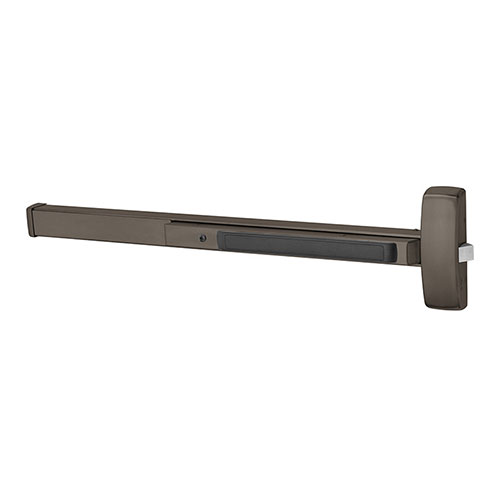
Rim Exit Devices
Rim exit devices are the most common solution for single doors or pairs of doors with a removable mullion. Because the latch bolt retracts against a strike mounted on the surface of the frame, these devices are easy to install, maintain, and inspect. They are the go-to choice for standard egress routes where reliability and simplicity are paramount.
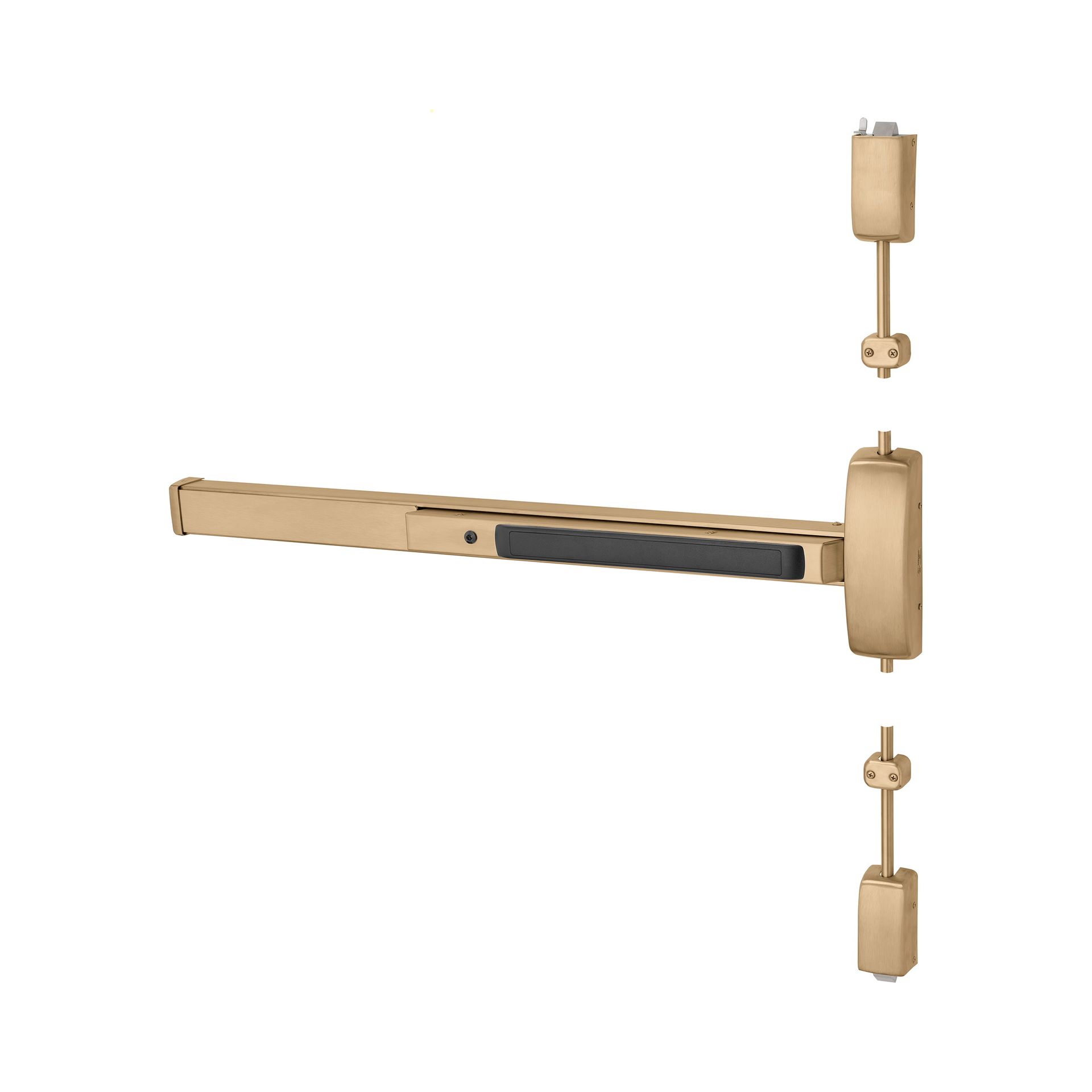
Surface Vertical Rod (SVR) Devices
Visible rods connect the device to top and, where supplied, bottom latches. For double doors where a center post (mullion) would obstruct the opening, Surface Vertical Rod (SVR) devices provide top and bottom latching points. This solves the problem of securing wide openings without sacrificing the ability to move large equipment or furniture through the doors. These are ideal for loading docks and theater entrances.
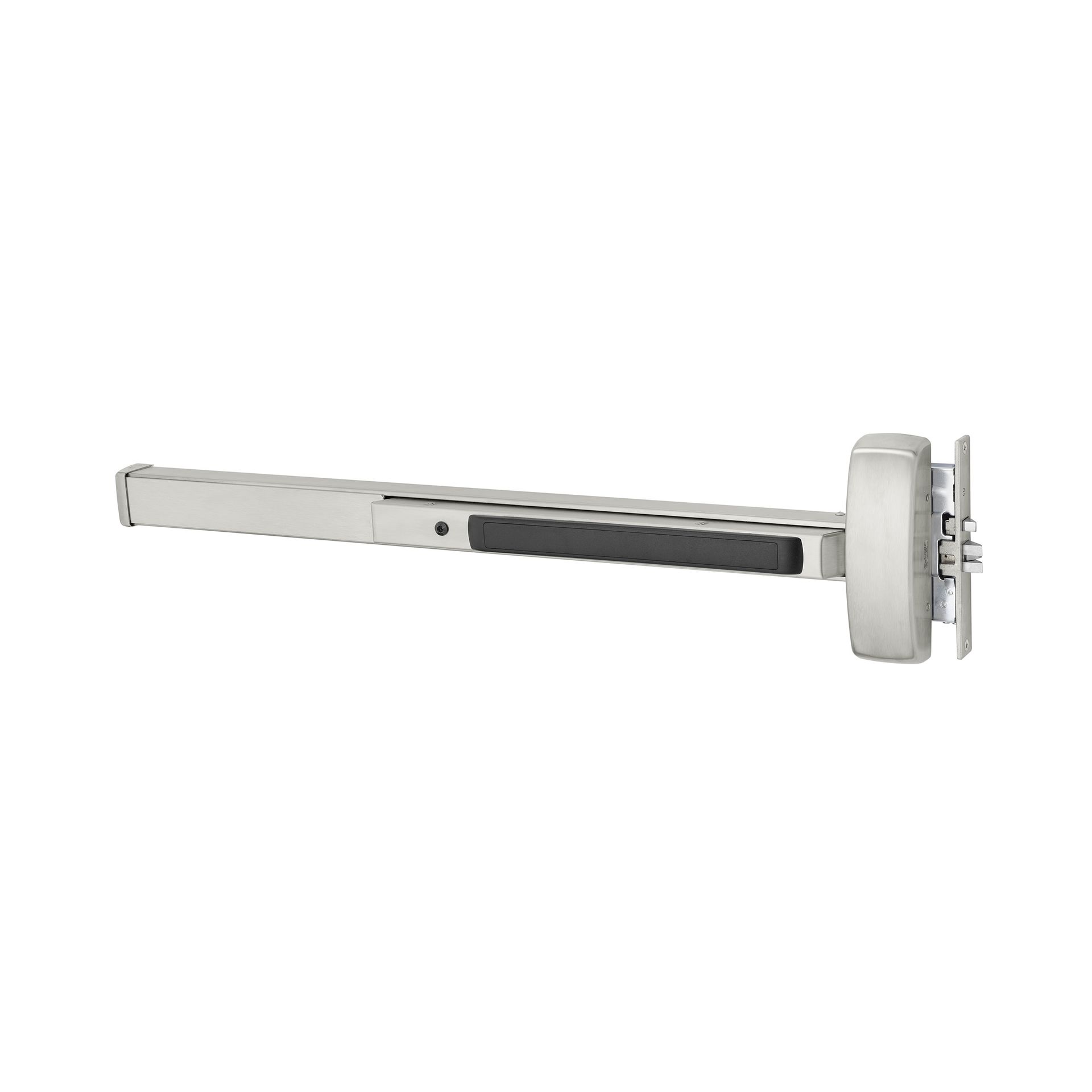
Mortise Exit Devices
Mortise exit devices integrate a mortise lock body into the door itself and release its latch through operation of the panic bar. They are not accurately described as using a deadbolt-style latch, and device type alone does not establish the highest level of physical security. Match the mortise case, strike, outside trim and door preparation to the specified opening and required listing.
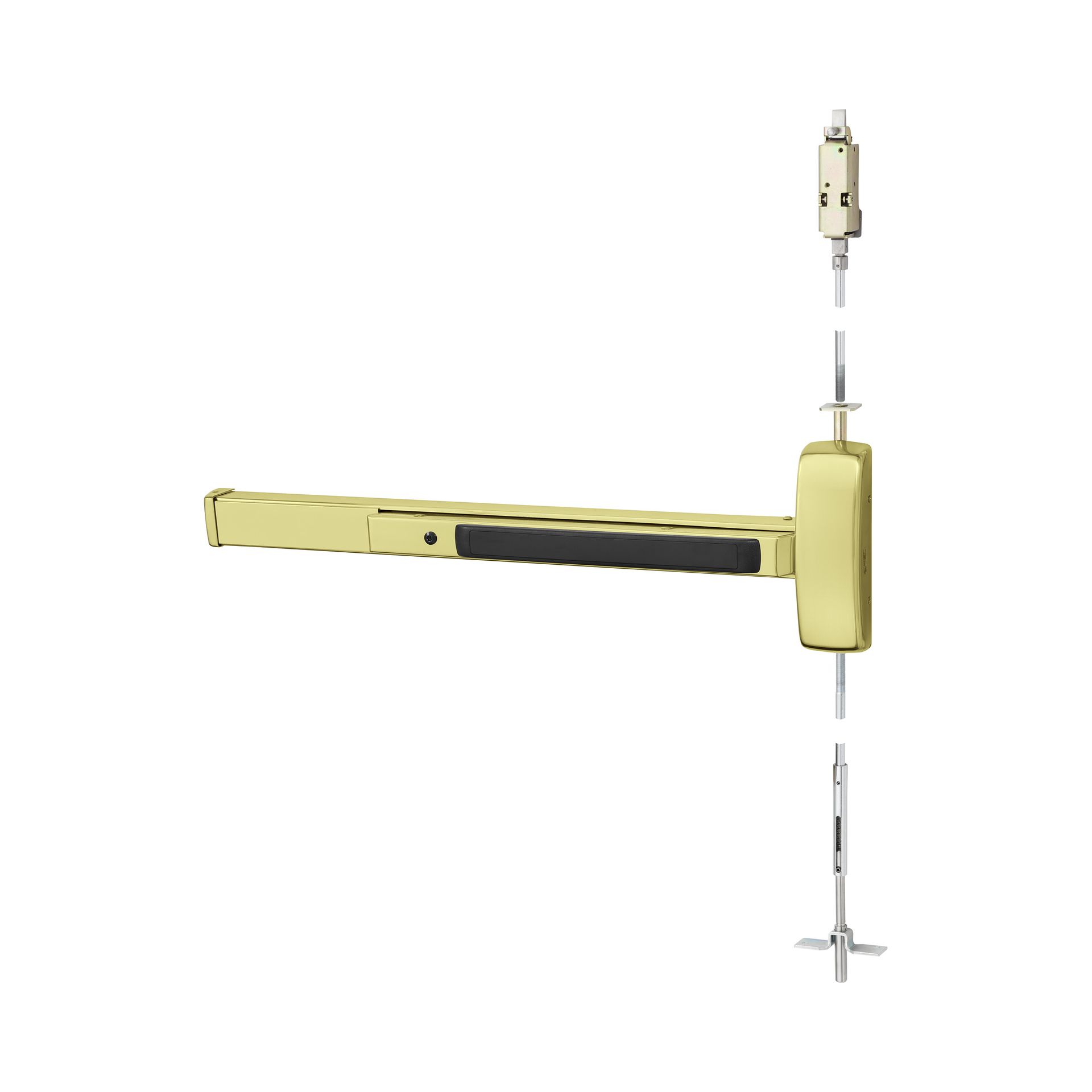
Concealed Vertical Rod (CVR) Exit Devices
Concealed Vertical Rod (CVR) exit devices house rod components inside the door stiles, protecting them from damage caused by carts or equipment and providing a clean architectural finish. Concealed rods do not automatically eliminate bottom latches or floor strikes. Top/bottom latching and less-bottom-rod configurations depend on the exact device, door construction and listed assembly; confirm the selected arrangement for the opening.
Representative product images identify the device type; exact appearance, trim and supplied components vary by model.
Planning a paired opening? A removable mullion is a compatible center strike support, not a fifth exit-device type. Check the rim devices, mullion, frame preparation, key-removal option and fire listing together. Browse removable mullions
Grade 1 - Architectural High Traffic Solutions


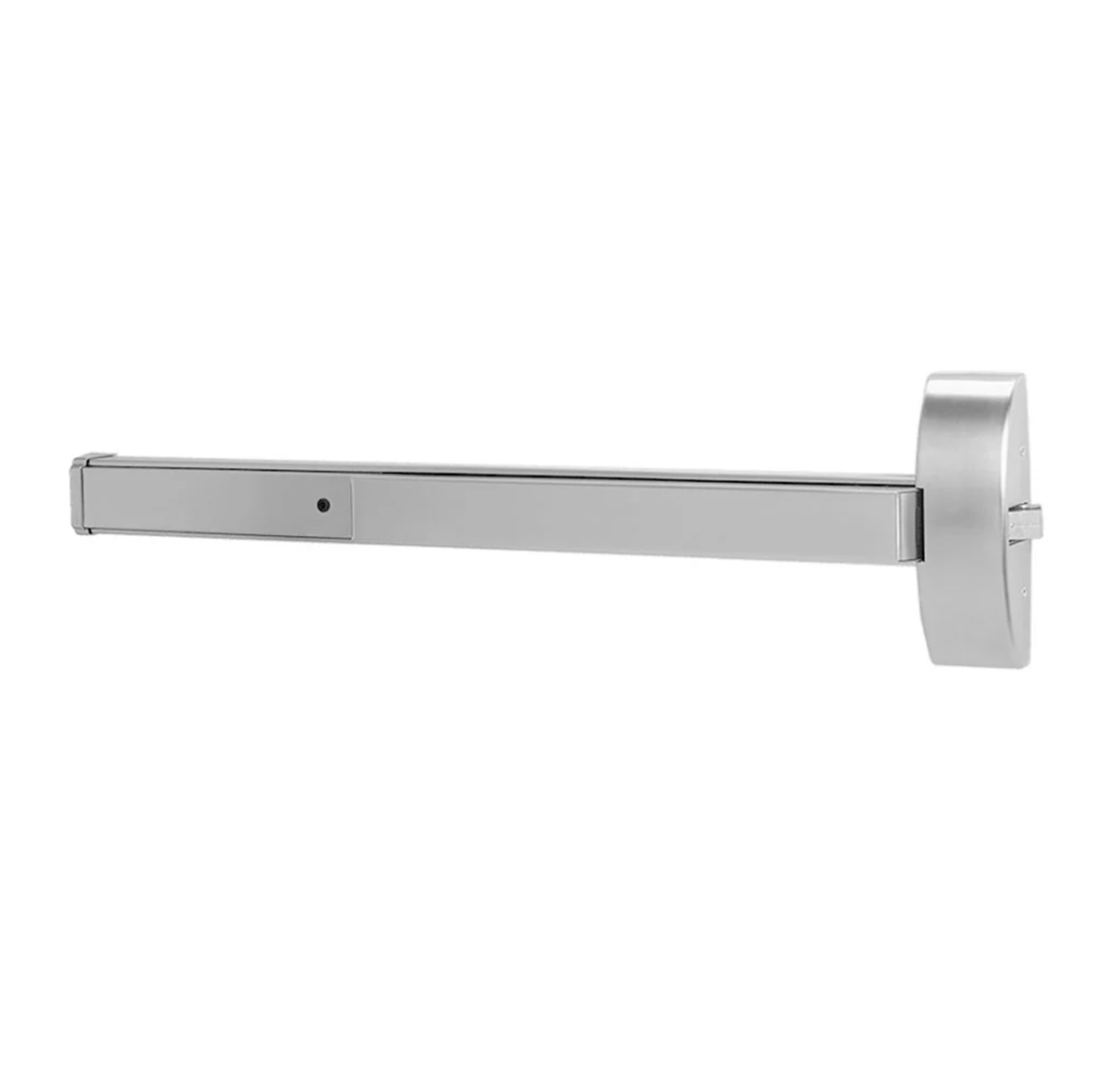

Grade 1 - Standard Commercial Solutions


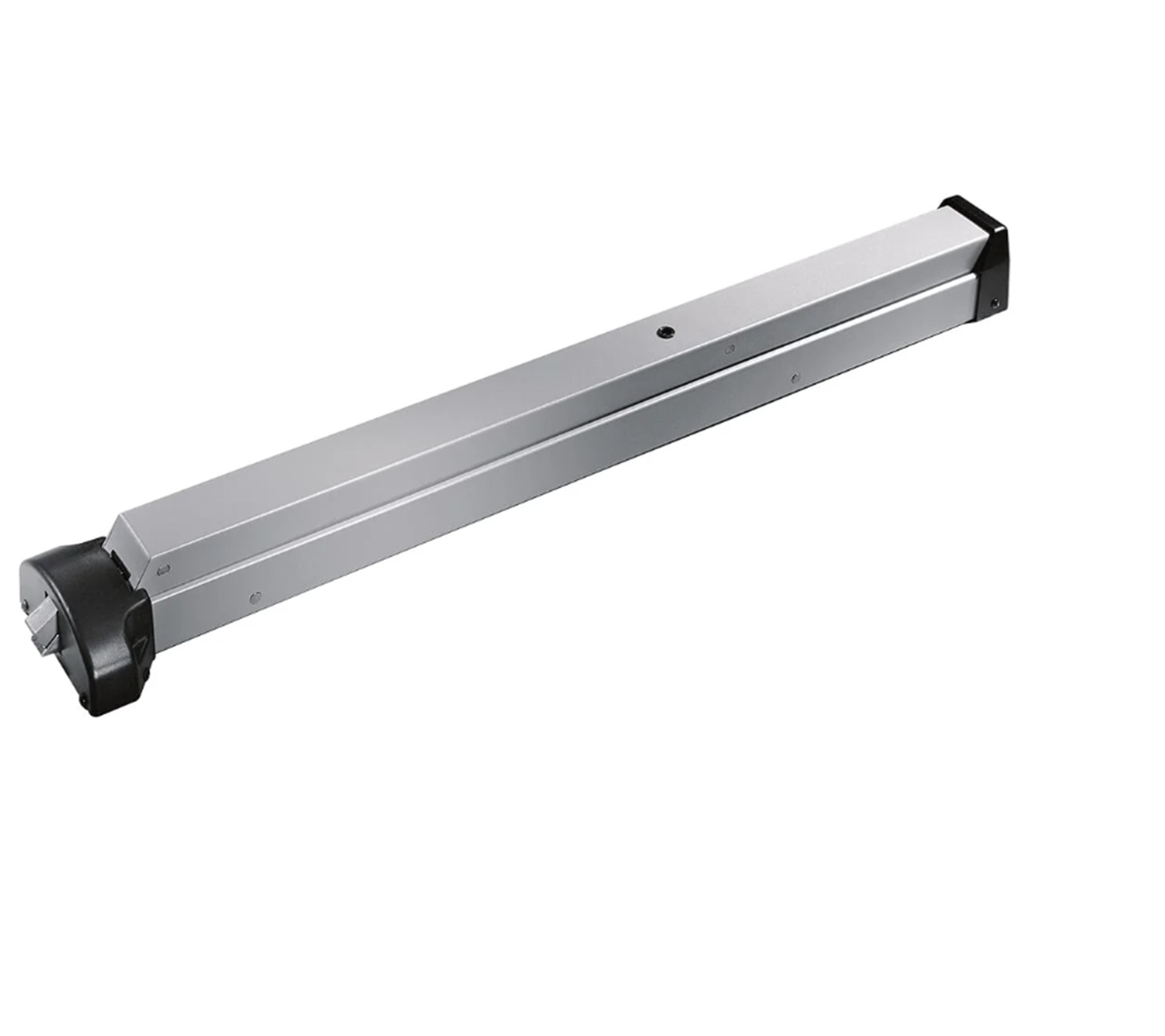
Choose hardware for the whole opening
1. Confirm fire-rated versus non-fire-rated hardware
Panic hardware and fire exit hardware are not interchangeable terms. A fire-rated opening requires the appropriately listed fire exit hardware and compatible door/frame assembly. Fire exit hardware must maintain positive latching; mechanical dogging that holds the latch retracted is not permitted on fire exit hardware. Confirm permitted electrical functions and release behavior for the exact listed assembly with the manufacturer and authority having jurisdiction.
2. Match door preparation, handing and dimensions
Record single or paired doors, material, thickness, stile width, existing holes and cutouts, door swing/handing, clear opening width and door height. Verify the manufacturer’s handing convention and whether the selected model can be field reversed. Nominal device length does not by itself establish the permitted door width: check the allowable cut-down range, trim clearance, rod length and template.
3. Select outside trim and cylinder/keying
Exit-only, pull, lever and keyed trim serve different entry needs. Passage, storeroom and other functions vary by series and trim. Match the actual function description and compatible cylinder or interchangeable-core preparation; do not assume matching lever appearance means matching operation. Outside access control must not compromise the required egress operation.
4. Coordinate electrified hardware
Electric latch retraction pulls back the latch for controlled access or coordinated door operation. Electrified outside trim controls entry without necessarily retracting the latch. They are different functions. Confirm voltage, current/inrush, duty rating, compatible power supply, power transfer, wiring and any required monitoring. Check fire-alarm/interface requirements and the permitted fire-door application for the selected system.
5. Distinguish alarmed from delayed-egress devices
An alarmed device can signal an attempted exit; it does not inherently delay release. Delayed-egress hardware intentionally delays release only in code-permitted applications and requires the specified signage, release sequence and system interfaces. Confirm occupancy, local code and authority approval rather than treating delayed egress as a standard add-on.
6. Match finish, environment and service needs
Choose the specified finish and coordinate the device, trim, mullion and fasteners. Verify exterior exposure, corrosion/environmental suitability, traffic requirements, grade and service parts for the exact configuration. A finish label or brand alone does not establish a rating or compatibility.
Browse by manufacturer and series
Keep the landing page’s quick series navigation, without treating brand or series as a substitute for the correct device type, options and listing.
Parts manuals, templates & installation instructions
Match the document to your exact series, device type, door material and options. Templates are not interchangeable across series.
Parts manuals
- Sargent 80 Series Parts Manual
- Sargent 80 Series Parts Manual A8231 05.2017
- Sargent 20 / 30 Series Parts Manual
- Yale 2100 Exit Device Parts Diagram 42110
- Accentra 7000 Series Parts Manual
- Accentra 6000 Series Parts Manual
- Dorma 9300 Parts List
- Dorma 9100 F9100 CVR Parts Manual
- Dorma 8300 F8300 Rim Parts Manual
Templates
- 6300R - Rim Device Template
- Sargent 8900 Series Template
- Sargent 8700 Series Template
- Sargent NB-8700 Template for Pair of Doors
- Sargent 8500 Series Template with ET Trim
- Sargent 80 Series Narrow Stile EM Template
- Sargent AD8400 Template
- Sargent MD8400 700 ETL Template
- Sargent 80 (12-)MD8600 WS CVR 59- Electroguard Inside…
- Sargent 80 (12-)MD8600 WS CVR Inside Trim Only Metal…
- Sargent 80 (12-)NB-MD8600 WS CVR Inside Trim Only Metal…
- Sargent 80 Series Electromechanical Options Template
- Sargent 700-4 ET Control Trim for 80 (12-)MD8400,…
- Sargent 80 NB-WD8600 WS CVR Wood Doors Tmpl.
- Sargent 80 Series WD8600 Wide Stile CVR Wood Doors Template
- Sargent 80 AD8600 WS CVR Aluminum Doors Tmpl.
- Sargent Top and Bottom Strikes for 80…
- Sargent 20 / 30 Series LL Lever Handle Template
- Sargent 12-3828 12-3828 Template
- Sargent 2727 3727 Template
- Sargent 649 Strike Double Door Mullion Template
- Accentra 1800(F), 2100(F) WS Rim 757F Strike HM…
- Accentra 6100, 6105, 7100, 7105 WS Rim 757 Strike HM…
- Accentra 6100, 6105, 7100, 7105 WS Rim 793 Strike Pair of…
- Accentra 6100(F), 7100(F) WS Rim 757F Strike HM…
- Accentra 1810(F), 2110(F) WS SVR 790 Floor Strike with…
- Accentra 7110(F), 7115 WS SVR HM Door/Frame Tmpl.
- Accentra 6170F90-10, 6170-10, 6175-10 7170F90-10,…
- 4500 Series Rim Door Prep Template
- 4500 Series Rim Template
- 4500 Series with Rim Cylinder Template
- 4500 Series SVR Latch Template
- 4500 SVR Chassis Template
- 4500 SVR Door Prep Template
- 4700 Rim with 4900 Mullion Template
- 4700 Series Rim Door Prep Template
- 4700 Series Trim Template
- 4700 Series SVR Door Prep Template
- 4700 Series SVR Latch Template
- Sargent Thermal Pins for 20, 30, and 80 Exit Devices and…
- Dorma T9300 Template
- Dorma T9400 Template
- Dorma T9100 Template
Installation instructions
- PDQ 4200R Series Install
- PDQ 4200V Install
- Yale 7110(F) Exit Device Install
- Sargent 8700 Install
- Sargent 8900 Install
- Sargent 8888 Install
- 6300R 6400R - Rim Device Install
- McKinney QC Installation
- Sargent NB8700 Install
- Sargent 8900 Series Install
- Sargent 8500 Series Install
- Sargent 8400 Series Instructions
- 43 Prefix Instructions
- 53 Prefix Instructions
- 59 Prefix Instructions
- Sargent 8600 Series Instructions
- Sargent 3828 Instructions
- Sargent 12-3727 12-NB3727 Instructions
- Accentra 2100 2100(F)WS WS Rim Single Door Install
- Accentra M200(F) Steel Mullions for 1500, 1800, 2100,…
- Accentra 2100(F), 2150(F) SquareBolt & 1800(F) Rim Exit…
- Accentra 7000 7100(F), 7150(F)(WS) WS Rim, SquareBolt…
- Accentra 6000 6100, 6200(M) Narrow and WS Rim Install
- Accentra 6116 A-ALR Alarm Kit for 6000 WS Mortise, Rim,…
- Accentra 1800 and 2100 1810(F), 2110(F), 2170(F)(LBR) WS…
- Accentra 7000 7110(F), 7170(F)(LBR) WS SVR Install
- Accentra 6000 6210, 6170(F) Narrow and WS SVR Install
- Accentra Thermal Pin for 6160(F), 6170(F), 7160(F),…
- 4500 Series Rim Install
- 4501 Series SVR Install
- 4700 Series Install
- 4700 Series Trim Install
- 4700 Series SVR and LBR Instructions
- Dorma 9300 F9300 Rim Install
- Dorma 9400 F9400 SVR Install
- Dorma 9100 F9100 CVR Install
- Dorma 8300 F8300 Rim Install
Series catalogs
Catalogs
- PDQ 4200 Series Catalog
- Accentra 7000 Series Catalog
- PDQ 6300 Series Catalog
- Sargent 80 Series Catalog
- McKinney Transfer Solutions Catalog
- Sargent 80 Series Catalog 2024
- Sargent 30 Series Catalog
- Accentra 2100 Series Catalog
- Accentra 1800 Series Catalog
- Accentra 6000 Series Catalog
- Catalog 2024 ExitsDevices v00
- Dorma 9000 Series Catalog 2024
Frequently asked questions
Is “panic bar” the same as “exit device”?
“Panic bar” and “push bar” are common customer terms. Exit devices include different latching arrangements and options; panic hardware and listed fire exit hardware have different application requirements. Select by the opening and listing, not the nickname.
Which type works on double doors?
Depending on the listed door assembly, paired openings may use rim devices with a compatible mullion, surface/concealed vertical rod devices, or a specified mortise-device arrangement. Check the complete hardware schedule and strikes before choosing.
Can I reuse the old trim, strike or cylinder?
Only after checking compatibility with the exact new device and function. Keep the series/model and photos of the existing preparation handy; do not mix parts solely because their dimensions or finishes look similar.
Where are replacement parts and documents?
Open the collapsed parts manuals, templates and installation instructions above. For replacement components, browse exit device parts and exit device trim. Match the model and revision before ordering.
When will my order ship?
Same-day shipping applies to in-stock items ordered by 2 PM ET. Check the product page for availability and lead time for your selected configuration.