
Grade 1 and Grade 2 Surface Door Closers
Commercial Door Closers
Surface door closers from Sargent, Corbin Russwin, Accentra, Hager, PDQ, dormakaba, Norton and IDC. Pick a type by what the door needs to do: close every time, hold open, stop at full open or run in a track. Then match the arm and size to your door.
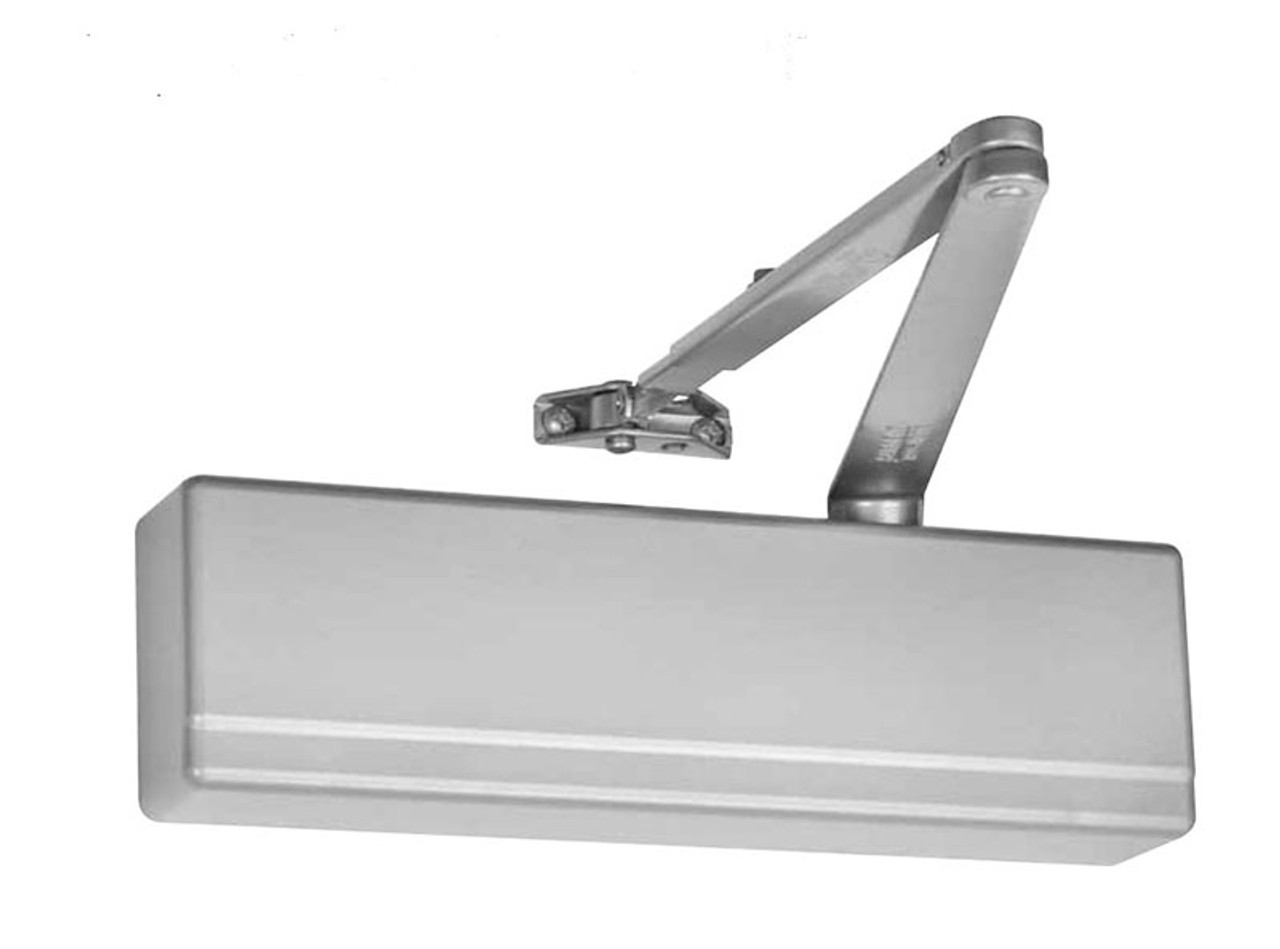
- ANSI/BHMA A156.4 Grade 1 and 2
- UL listed for fire doors
- Adjustable sizes for ADA
- Regular, top jamb and parallel arm
Choose Your Closer Type
Each card opens that type's products.
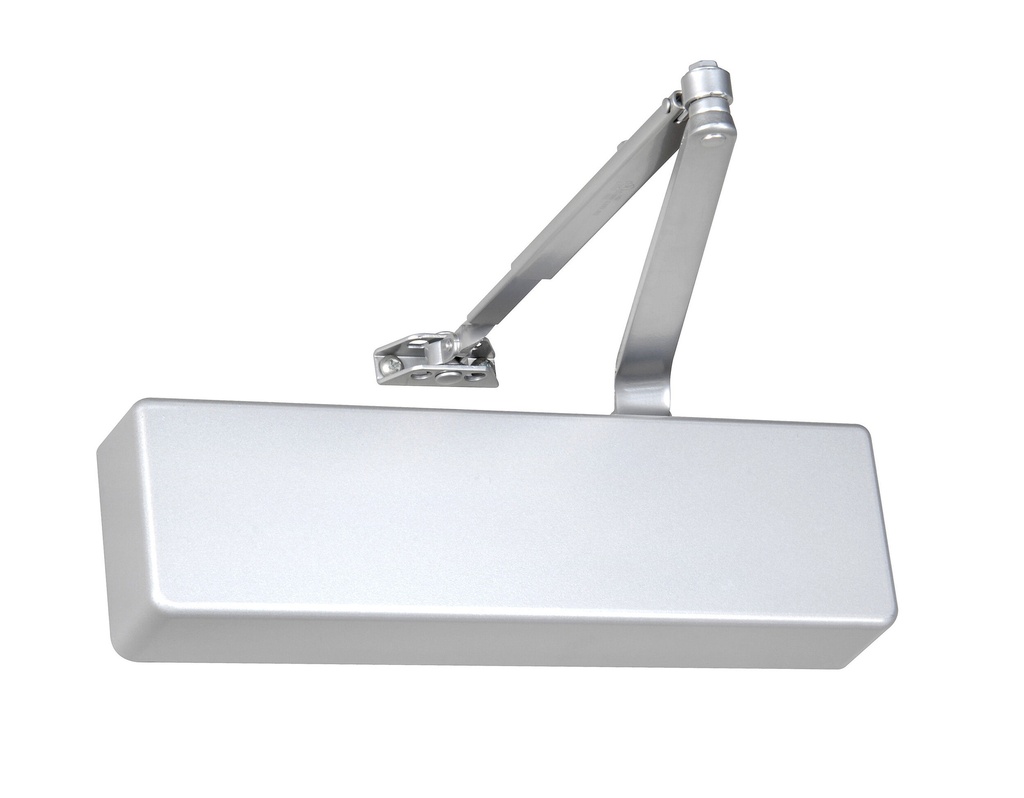
Non-Hold Open Closers
Always close and latch the door
42 listings
- What it is: A surface closer whose arm always brings the door back to closed and latched.
- Use it for: Fire doors, stairwells, corridors and secure exterior doors.
- How it mounts: Surface mounted in regular arm (pull side), top jamb or parallel arm (push side). Many ship as a tri-pack.
Ratings
ANSI/BHMA A156.4, most Grade 1. Many are UL listed for fire doors. Adjustable spring sizes help meet ADA opening force.
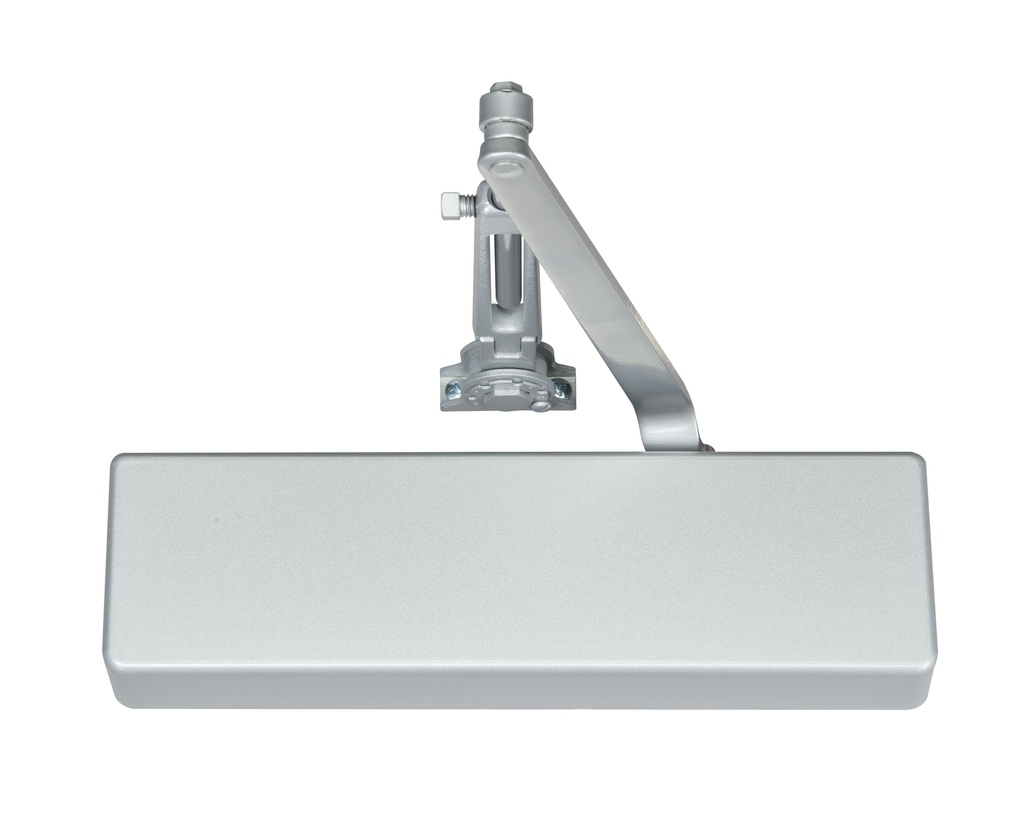
Hold Open Closers
Arm holds the door open
36 listings
- What it is: A closer with a friction, thumbturn or track hold-open that keeps the door open at a set angle.
- Use it for: Offices, classrooms and storerooms on doors that are not fire rated.
- How it mounts: Parallel arm, regular arm or track arm with a hold-open feature.
Ratings
ANSI/BHMA A156.4, most Grade 1. Mechanical hold-open is not allowed on fire doors. Use an electromagnetic holder there.
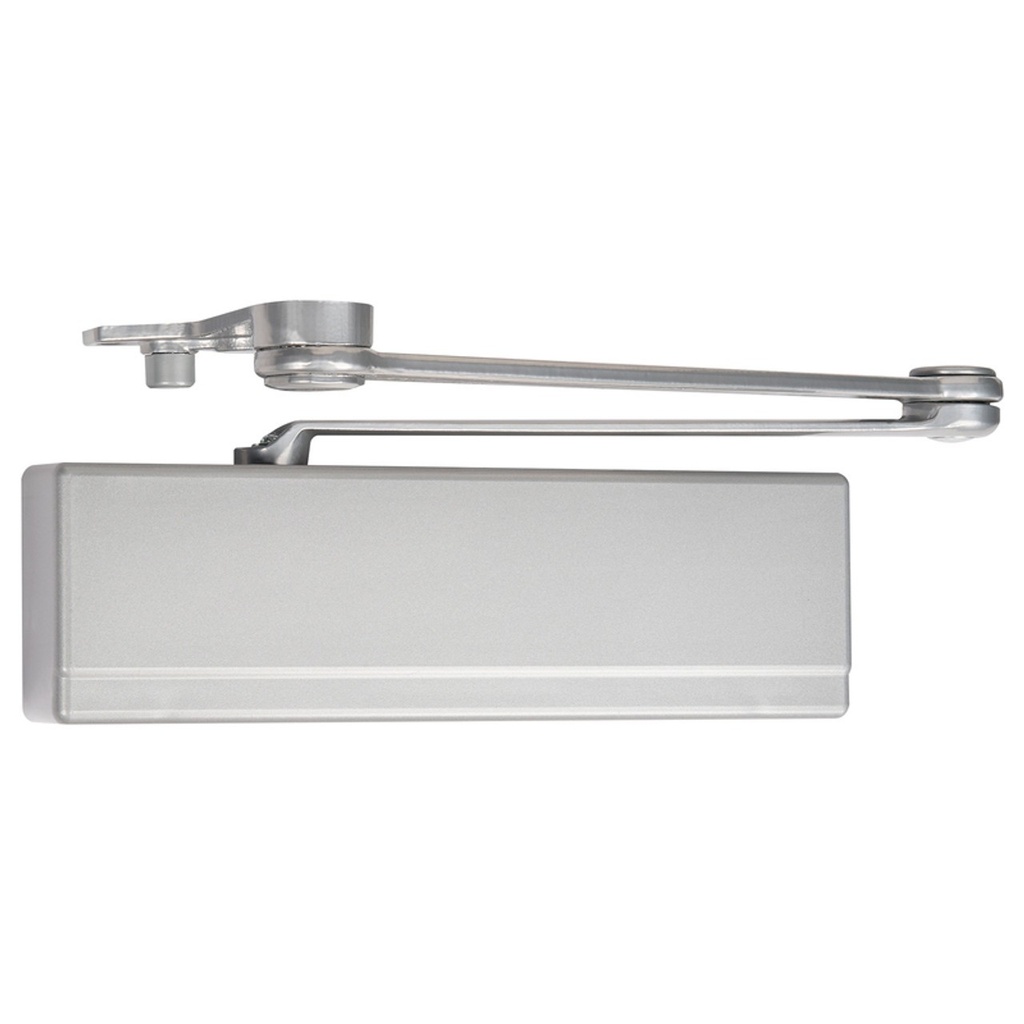
Stop Arm Closers
Built-in stop protects the wall
14 listings
- What it is: A parallel arm closer with a built-in rigid, spring or cushion stop that stops the door at its full open point.
- Use it for: Doors with no wall stop, busy entrances and doors that get blown or pushed open hard.
- How it mounts: Parallel arm on the push side of the door, with the stop set to the opening angle.
Ratings
ANSI/BHMA A156.4, most Grade 1. Check each listing for the fire rating.
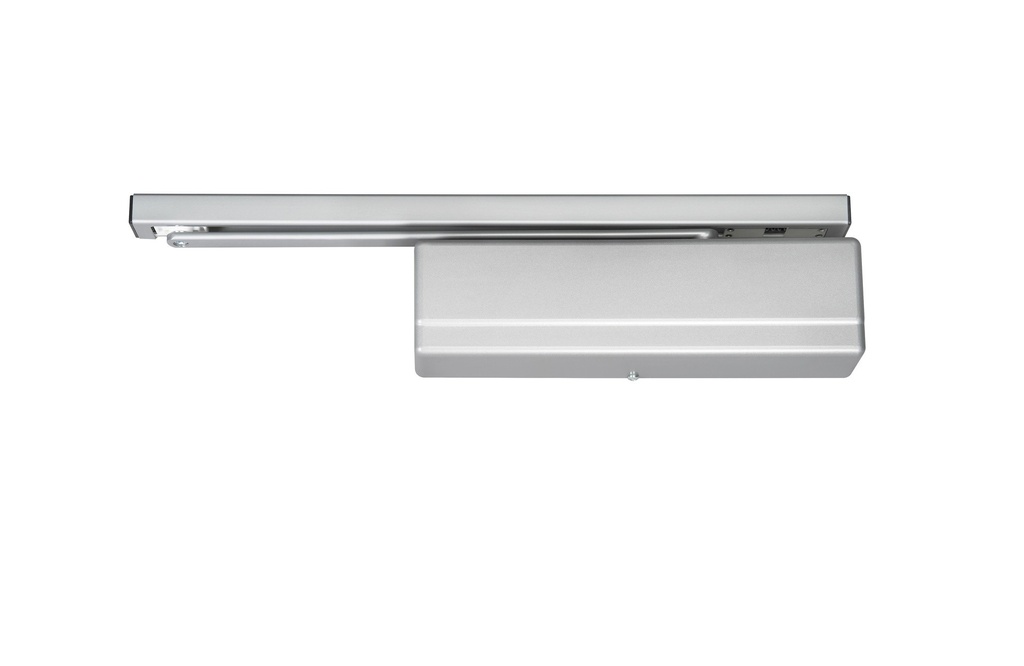
Track Arm Closers
Slide track, no projecting arm
18 listings
- What it is: A closer that runs a roller in a slide track instead of a jointed arm.
- Use it for: Lobbies, schools and public areas that need a clean look and less arm to grab or hang on.
- How it mounts: Pull side or push side, with the track on the door or frame. Hold-open and stop tracks are available.
Ratings
ANSI/BHMA A156.4, most Grade 1. Hold-open tracks are not for fire doors. Check each listing.
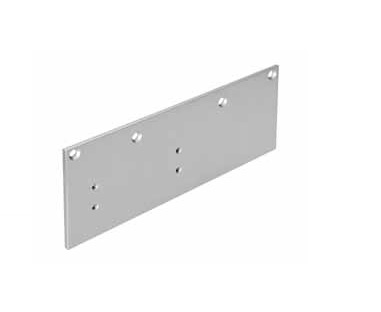
Closer Parts and Drop Plates
Arms, plates, covers and brackets
67 listings
- What it is: Replacement arms, drop plates, covers, brackets and shoes for the closers we carry.
- Use it for: Mounting a closer on a narrow top rail, matching old holes, or repairing a closer in place.
- How it mounts: Made for a specific closer series. Match the part to your closer's brand and series.
Ratings
Keeps the closer's original listing when used with the matching series. Check each listing.
Shop by Brand and Series
Know the closer you have? Go straight to its series.
Guides
Tap a guide to open it.
Compare the Closer Types
| Type | How it mounts | Standard | Best for |
|---|---|---|---|
| Non-hold open closers | Surface mounted in regular arm (pull side), top jamb or parallel arm (push side). Many ship as a tri-pack. | ANSI/BHMA A156 | Fire doors, stairwells, corridors and secure exterior doors. |
| Hold open closers | Parallel arm, regular arm or track arm with a hold-open feature. | ANSI/BHMA A156 | Offices, classrooms and storerooms on doors that are not fire rated. |
| Stop arm closers | Parallel arm on the push side of the door, with the stop set to the opening angle. | ANSI/BHMA A156 | Doors with no wall stop, busy entrances and doors that get blown or pushed open hard. |
| Track arm closers | Pull side or push side, with the track on the door or frame. Hold-open and stop tracks are available. | ANSI/BHMA A156 | Lobbies, schools and public areas that need a clean look and less arm to grab or hang on. |
| Closer parts and drop plates | Made for a specific closer series. Match the part to your closer's brand and series. | Keeps the closer's original listing when used with the matching series | Mounting a closer on a narrow top rail, matching old holes, or repairing a closer in place. |
Which Closer Do I Need?
- Fire door, stairwell or any door that must close and latch every time: a non-hold open closer.
- Door that should stay open for traffic and is not fire rated: a hold open closer.
- No wall stop, or the door gets pushed or blown open hard: a stop arm closer.
- Want a clean look with no jointed arm, such as a school or lobby: a track arm closer.
- Replacing an arm or plate, or mounting on a narrow top rail: closer parts and drop plates for your series.
- Heavy traffic or exterior doors: pick a Grade 1 closer. Standard interior office doors can use Grade 2.
Regular Arm, Top Jamb or Parallel Arm?
Regular arm: closer on the pull side of the door, arm out to the frame. Simple and strong, but the arm sticks out.
Top jamb: closer on the frame head on the push side. Used when the door top rail is too narrow for the body.
Parallel arm: closer on the push side of the door with the arm folded along it. The usual choice for corridors and exterior doors because the arm is out of reach.
Tri-pack closers include the brackets for all three, so one closer covers most doors.
Grades, Sizes and Ratings Explained
ANSI/BHMA A156.4 is the standard for door closers. Grade 1 is the heaviest duty, tested for the most cycles. Grade 2 suits standard interior doors.
Size 1 to 6: the spring strength. Bigger and heavier doors, exterior doors and windy openings need a higher size. Most commercial closers are adjustable across a range.
ADA: interior doors should open with no more than 5 lbf of force, so set the spring as light as the door allows.
Fire doors: the closer must be UL listed and must close and latch the door every time. Mechanical hold-open arms are not allowed on fire doors.
Back-check and delayed action: back-check slows the door near full open. Delayed action holds the door briefly before it starts to close.
Replacing a Closer and Matching the Holes
- Note the brand and series cast or printed on the old closer body, and the arm type.
- Measure the hole pattern on the door and frame. A closer from the same series or a matching drop plate avoids drilling new holes.
- Use the "Closer Body Hole Pattern" filter on the closer pages to match an existing pattern.
- Check the door size, weight and whether it is exterior to pick the spring size.
- On fire doors, replace with a UL listed closer of the right type.